


Sustainability in modern football is rapidly evolving from mere statements of intent into a core strategic pillar of club operations. Against the backdrop of a profound industry transformation, Udinese Calcio achieves a new international benchmark by launching the “Play for Sustainability – All on the Pitch for the Planet” initiative.
Debuting at Bluenergy Stadium and Applying the UEFA Manual
The key appointment is set for Saturday, September 19, 2026, when Udinese hosts Cagliari in Serie A. On this occasion, the Friulian club will become the first in Europe to implement the guidelines of the Football Event Sustainability Manual directly on the pitch. This operational framework was developed by UEFA and European Leagues to measure and reduce the environmental impact of football events throughout their entire lifecycle.
Designed not as an isolated campaign but as an annual commitment, the initiative aims to test and progressively optimize the club’s ESG practices. Bluenergy Stadium will serve as an innovation lab where the matchday on September 19 will be used to test concrete actions: from low-emission mobility via the Stadium by Bike project, to energy efficiency, waste recycling, responsible catering, and enhanced accessibility. At the core of the project lies a rigorous post-match data collection and reporting phase covering consumption and attendance, establishing an analytical benchmark for future editions.
Institutional Alignment and Strategic Vision
As highlighted by Magda Pozzo, the club’s vision focuses on creating an impact that extends far beyond the 90 minutes on the pitch, turning the collaboration with UEFA and the adoption of the manual into a tool for continuous improvement. This approach is shared by Filippo Veglio, Chief of Social & Environmental Sustainability at UEFA, who emphasized how Udinese’s experience can serve as a blueprint for the entire European football movement, demonstrating the viability of embedding ESG criteria into standard league matches. Similarly, Serie A President Ezio Simonelli welcomed the initiative for building on system-wide sustainability efforts such as the Road to Zero project.
Infrastructure and ESG Positioning: The Udinese Model
For Udinese, this step represents the natural evolution of a strategic journey that has already established the club at the top in Italy and among the leading European clubs for sustainability perception and reputation. This leadership is backed by tangible infrastructure investments, including a 2,409-panel solar array integrated into the stadium roof and the launch of the Energia in Campo Renewable Energy Community. With this new milestone, the Friulian club reinforces how modern management of physical assets and matchday operations can become a powerful growth driver for the entire sports industry.
Udinese Leads the Way in Europe: Matchdays Become a Sustainability Benchmark with UEFA Manual
Sustainability in modern football is rapidly evolving from mere statements of intent into a core strategic pillar of club operations. Against the backdrop of a profound industry transformation, Udinese Calcio achieves a new international benchmark by launching the “Play for Sustainability – All on the Pitch for the Planet” initiative. Debuting at Bluenergy Stadium and Applying the UEFA Manual The key appointment is set for Saturday, September 19, 2026, when Udinese hosts Cagliari in Serie A. On this occasion, the Friulian club

Evolution of Sustainability Policies and Strategies in FIFA
Editorial contribution by FDC Consulting Digital ESG FIFA governs football on a global scale. It coordinates over 200 national associations, organizes the most-watched tournaments on the planet, and generates economic flows that few other sectors can match. All of this brings with it an environmental and social responsibility of extraordinary proportions. How has it addressed this in recent years? With a strategy that has made significant strides on paper, but still displays relevant contradictions in practice. Understanding this evolution is useful
“Pick-and-Drop” sustainability: how the New UEFA Manual changes the rules of Sport Business
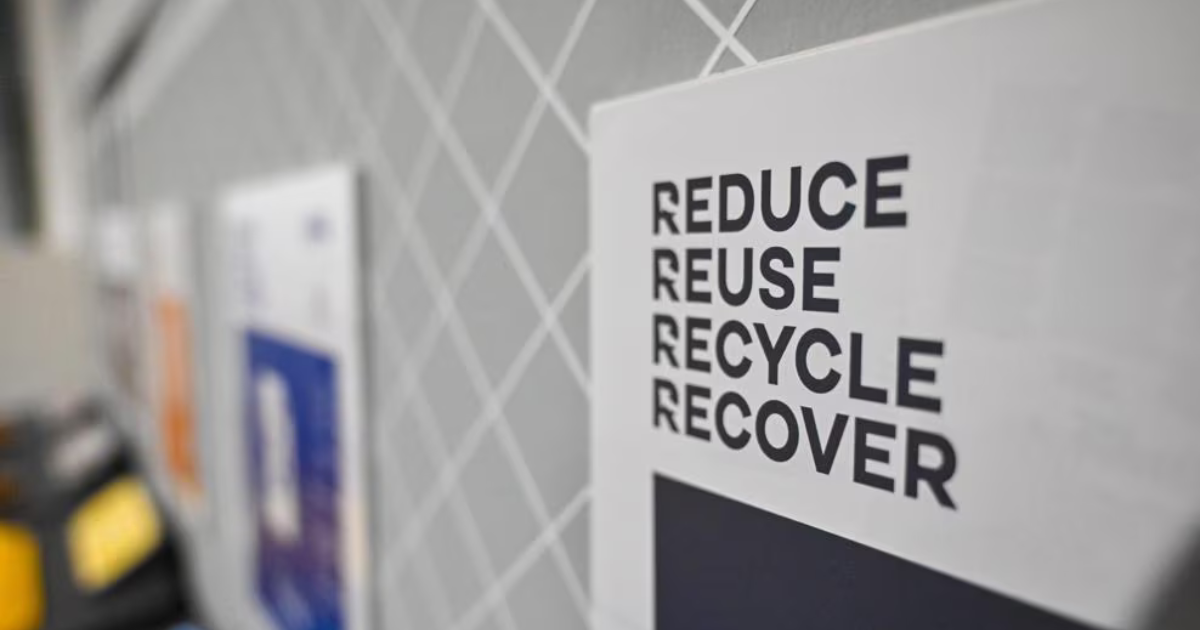
Sustainability has ceased to be a balance-sheet cost incurred solely for public relations purposes, transforming instead into an essential strategic lever to guarantee the sector's long-term economic, financial, and social longevity Sustainability in football has officially moved past the greenwashing phase and entered the realm of pure corporate strategy. With the sport business industry increasingly driven by highly stringent ESG criteria, UEFA and European Leagues have launched a tool designed to redefine event management for a movement that counts over 90

Building a sustainable football club: tools, metrics, and strategic plans
Talking about sustainability has become easy. Actually building it is a completely different story. The difference between a club with a genuine ESG journey and one that merely uses ESG as a communication tool lies entirely here: in the method, the tools, and the numbers. Not in the intentions. In this context, it is essential to understand the concrete steps required to build an effective ESG framework—one that delivers measurable results and stands up to scrutiny from UEFA, sponsors, and institutional
Sustainable Stadiums in Football: How Clubs and Designers Are Making an Impact
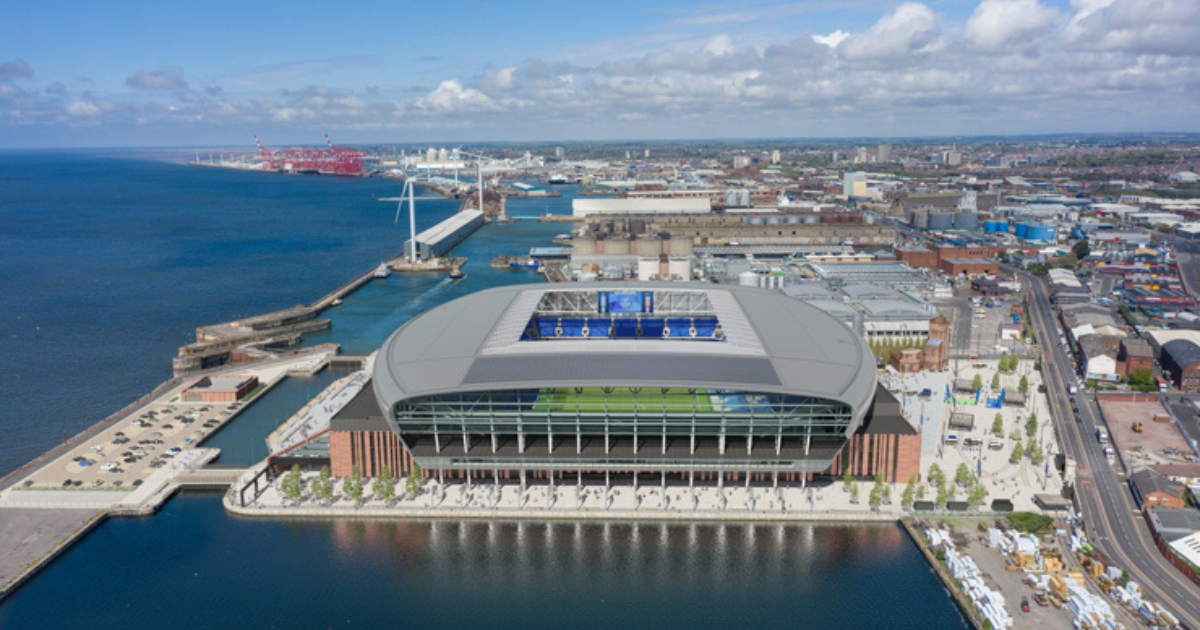
Sustainability is no longer an afterthought in football: it’s becoming part of the very blueprint of how clubs, architects, and communities think about stadiums. At a recent panel, representatives from Populous, Fulham FC, and Everton FC shared how they are translating ambition into action. Populous, the global design company behind many modern stadiums, explained how environmentally responsible design starts at the very foundation. From energy-efficient systems to sustainable materials, the goal is to create venues that not only reduce carbon impact
UEFA: Michele Uva Unveils the Sustainable Strategy for Euro 2032 and the Stadium Revolution in Italy
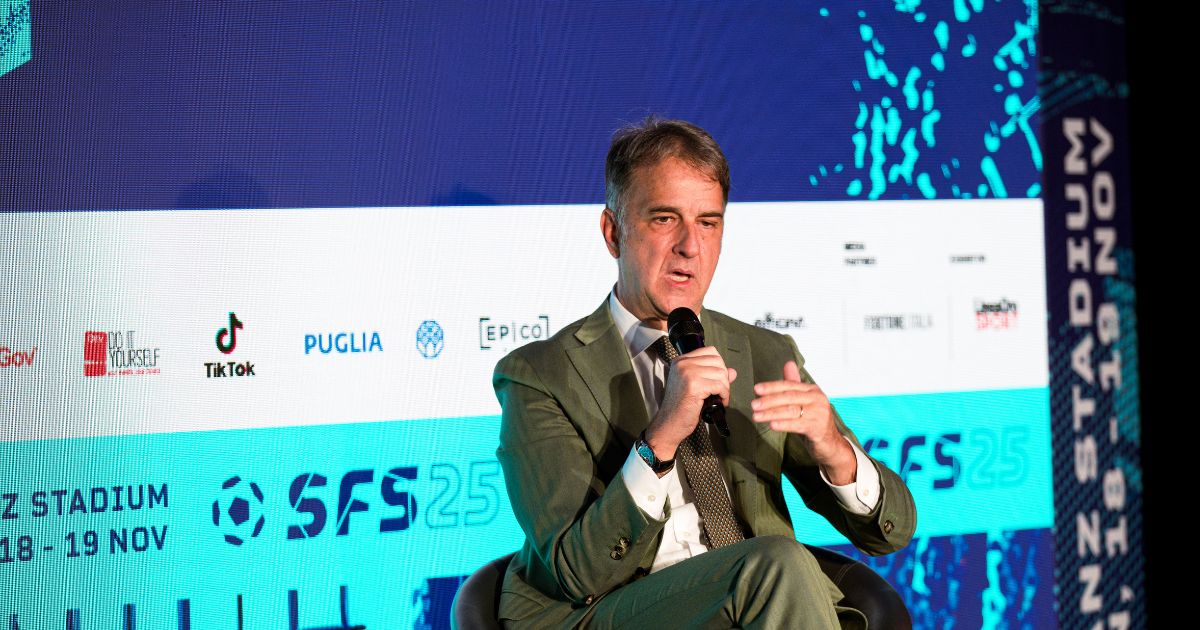
Michele Uva, the Executive Director for Social and Environmental Sustainability and UEFA delegate for Euro 2032, was the guest of honor on the Football Stage, interviewed by Elisabetta Esposito of La Gazzetta dello Sport. Uva, recently included in Time's list of the 100 most influential people in the world, outlined UEFA’s strategy concerning Corporate Social Responsibility (CSR) and its impact on European football, with a crucial focus on the stadium issue ahead of Euro 2032. A systemic effort: Investing in CSR Uva
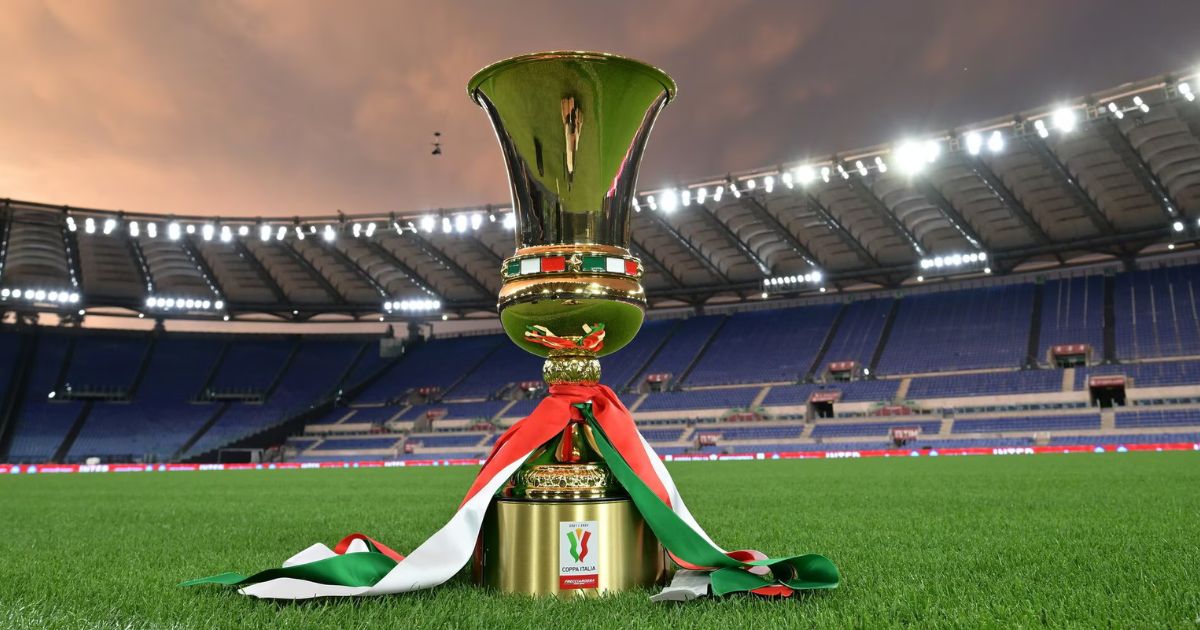
THE 2025 COPPA ITALIA FINAL HIGHLIGHTS SUSTAINABILITY BEST PRACTICE
After the inaugural edition of the “Road to Zero” project in 2024, Lega Serie A, Sport e Salute, Roma Capitale and Roma Servizi per la Mobilità, with the support of UEFA, continued their commitment to sustainability during the 2024/2025 Frecciarossa Coppa Italia Final. The final hosted AC Milan and Bologna FC at the Stadio Olimpico in Rome on the 14th May 2025 and saw the implementation of several initiatives in alignment with last years’ “Road to Zero” ESG (Environmental, Social and Governance) framework. The “Road to Zero” ESG framework was