


You do not necessarily have to play in Serie A or have won a World Cup to demonstrate your talent in the United States. Today, a street footballer with millions of followers may have a profile just as compelling, from a U.S. immigration perspective, as that of a professional soccer player.
By Giorgio Polacco – Immigration Attorney, Arce Immigration Law
When we think about soccer and professional opportunities in the United States, we almost always picture star players, international transfers, and champions who choose Major League Soccer to continue their careers. Lionel Messi is probably the clearest example of how one individual can transform the visibility and commercial value of soccer in the United States.
But today, another group of figures in the world of soccer deserves attention: football content creators, freestylers, and street footballers, professionals who may never have played in the Champions League but reach millions of people every day through social media. And this new reality is opening up intriguing possibilities in U.S. immigration law as well.
The Case of a Street Footballer: When Talent Goes Digital
Recently, at our U.S. immigration law firm, we handled the case of an internationally renowned street footballer with millions of social media followers. This was a very different profile from those we typically encounter in sports immigration cases.
No transfers between professional clubs. No multimillion-dollar contract with a Serie A team. No World Cup trophy on the shelf. Yet here was a professional capable of reaching an enormous international audience, generating commercial interest, and building a personal reputation through his soccer skills.
The question we asked ourselves was simple: why should a soccer player be able to demonstrate international success through trophies, while a street footballer should not be able to demonstrate it through millions of followers and worldwide recognition? The answer is more interesting than you might imagine.
The O-1 Visa: Talent Is Not Measured by Trophies Alone
The United States has a special visa category known as the O-1, intended for individuals who have demonstrated extraordinary ability in their field. In sports, the O-1A visa allows an athlete to establish national or international recognition through various forms of evidence, including awards, professional achievements, press coverage, significant roles, and other documented forms of recognition.
But the essential point is that there is no rule requiring someone to have won a championship or played for a professional team to qualify for an O-1 visa. The law requires applicants to demonstrate an exceptionally high level of achievement in their field, not necessarily to have followed a traditional athletic career path.
That is where social media become particularly relevant. An athlete with millions of followers, partnerships with international brands, appearances at major events, and substantial media exposure may have valuable evidence to support their professional reputation.
Of course, having millions of followers does not automatically guarantee a visa. It is necessary to show that those numbers reflect genuine professional recognition and that the applicant meets the requirements of the relevant immigration category.
Moreover, for hybrid professionals such as street footballers and content creators, correctly identifying their field of endeavor is essential. Depending on the nature of their careers and their plans in the United States, it may be necessary to consider visa categories beyond those specifically intended for athletes.
But Can Millions of Followers Be Worth as Much as a Trophy?
From a strictly legal standpoint, there is no automatic equivalence between a sports trophy and a follower count. But when it comes to international reputation, the question is entirely reasonable. Consider two profiles.
The first is a professional soccer player who has competed in major international tournaments, earning recognition and achieving notable results. The second is a street footballer who has used his skills with a soccer ball to build a community of millions, works with major sports brands, and is invited to events in different countries.
These are two entirely different career paths, yet both can represent forms of international success and recognition.
The difference is that the first built his reputation inside a stadium, while the second built his on screens viewed by millions.
Our job as immigration attorneys is precisely to understand how to document these emerging forms of excellence using the legal tools available under U.S. law. An Instagram page with impressive numbers is not enough. We must examine the quality of the audience, independent media coverage, the value of commercial partnerships, professional accomplishments, and the actual recognition achieved within the field.
Soccer Is Changing. Immigration Law Must Respond to This Transformation, Too.
In recent years, the world of soccer has increasingly expanded beyond the ninety minutes of a match. Today, a football content creator may have a larger audience than many professional soccer players. They can work directly with international sponsors, participate in global advertising campaigns, and become a role model for millions of young fans.
The economic and media value of a figure in the soccer world no longer depends exclusively on performance on the field. This shift is especially relevant in the United States, where sports, entertainment, marketing, and content creation are increasingly interconnected.
Yet many people still believe that pursuing a professional career in the United States through sports requires prior experience on a professional team. That is not necessarily the case.
Existing visa categories may also offer opportunities to professionals who have built careers through unconventional paths, provided they can establish the required qualifications and have a coherent professional plan in the United States.
The Future of Football Is Not Confined to Stadiums
The case we recently handled reinforced something we have come to believe: the meaning of success in the soccer world is evolving much faster than we might imagine. In the past, an athlete’s international recognition was measured primarily by appearances, titles, and competitions.
Today, we must also consider media impact, cultural influence, and the ability to build a global audience. This does not mean that one million followers automatically carry the same weight as a world title in the eyes of U.S. immigration authorities.
It does mean, however, that someone whose talent captivates millions of people through a smartphone may have professional opportunities in the United States that, until just a few years ago, seemed reserved for soccer’s biggest stars.
To me, this is one of the most fascinating transformations in the relationship between sports, the digital economy, and international mobility.
Because in modern soccer, becoming a global star sometimes no longer requires a stadium. All it takes is a ball, a camera, and extraordinary talent.
Giorgio Polacco is a Florida-licensed attorney and Partner at Arce Immigration Law, based in Miami. He practices U.S. immigration law, assisting athletes, professionals, entrepreneurs, and individuals in the sports and entertainment industries with their professional plans in the United States.
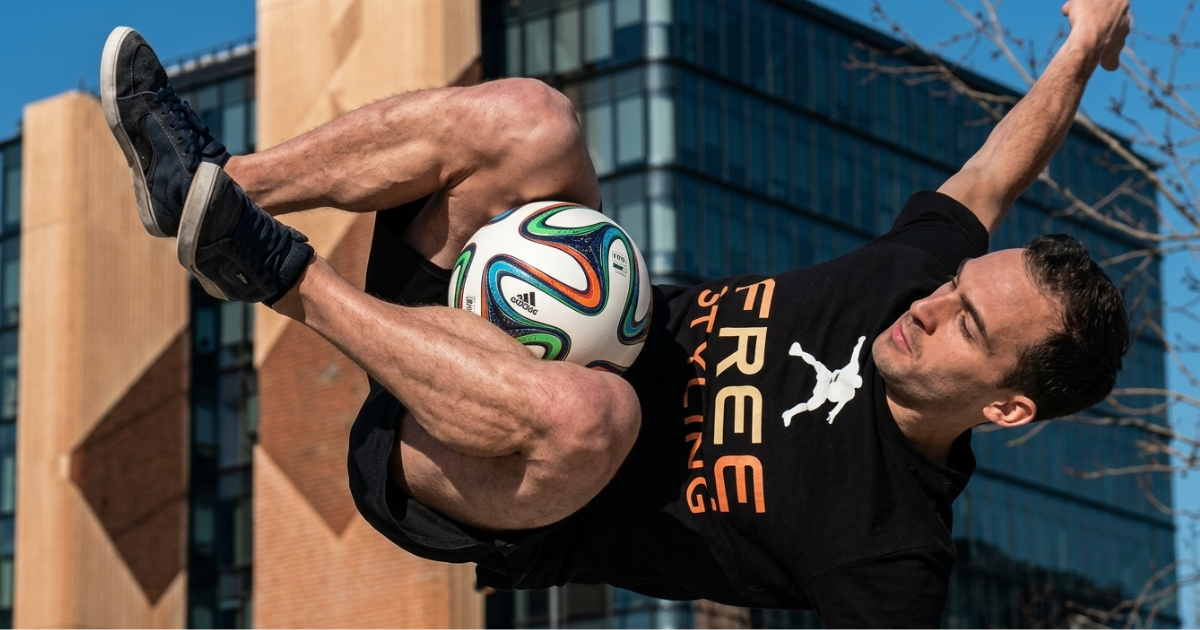
From Street Football to the United States: How Social Media Are Changing the Rules for Securing a U.S. Sports Visa
You do not necessarily have to play in Serie A or have won a World Cup to demonstrate your talent in the United States. Today, a street footballer with millions of followers may have a profile just as compelling, from a U.S. immigration perspective, as that of a professional soccer player. By Giorgio Polacco – Immigration Attorney, Arce Immigration Law When we think about soccer and professional opportunities in the United States, we almost always picture star players, international transfers, and champions
The Breakaway: Transforming Interest in Women’s Sport into Tangible Business Growth for Clubs, Brands, and Investors
Growing attention toward women’s sport creates new possibilities for sports organizations, brands, and investors. However, converting this momentum into commercial growth requires answering precise questions: Who are the fans to win over? What characteristics make a team recognizable? What can a women's sports organization offer a brand, and what does it take to develop sponsorship value over time? These decisions are precisely what The Breakaway focuses on as a strategic advisory firm specializing in the business of women’s sport. The Breakaway
YouGov Joins SFS 26 as Gold Partner: Driving Sports Business through Data, FanIntelligence, and Brand Perception
Social Football Summit (SFS) is thrilled to announce YouGov as a Gold Partner of SFS 26, taking place on November 10–11, 2026, at the Allianz Stadium in Turin. YouGov is a leading global data and market research firm specializing in continuous tracking of consumer and sports fan opinions, behaviors, and brand perceptions worldwide. Leveraging proprietary audience intelligence tools such as YouGov Profiles and daily brand tracking platforms like YouGov BrandIndex, the company equips clubs, leagues, media networks, and sponsor brands
The Breakaway Joins SFS 26 as Gold Partner: Shaping the Commercial Future of Women’s Sport
The Social Football Summit (SFS) is thrilled to announce The Breakaway as a Gold Partner of SFS 26, taking place on November 10–11, 2026, at the prestigious Allianz Stadium in Turin. The Breakaway is a strategy advisory firm dedicated to advancing the business of women’s football and women's sport. Built on the core principle that "women's sport is not a copy of the men's game," the advisory platform works alongside clubs, leagues, federations, brands, and investors to develop distinct, sustainable business

Lazio Region and the Rome Chamber of Commerce at SFS 26: Applications are open for 3 Regional Startups and SMEs
The growth and long-term competitiveness of the modern football industry rely heavily on fresh ideas, emerging technologies, and sustainable business models. In this context, strong collaboration between public institutions and innovation hubs represents a critical engine for connecting regional entrepreneurial ecosystems with the broader dynamics of international sports business. Reflecting this commitment to regional economic development, the Rome Chamber of Commerce—supported by its Special Agency Sviluppo e Territorio—and the Lazio Region, through Lazio Innova, have launched a joint public call. Together,
Technology, Sustainability, and Strategic Advisory: AI Week, ESGeo – RISE, and Football Benchmark Join SFS 26 as Premium Partners
The transformation of the modern football industry demands the integration of multidisciplinary expertise and the adoption of high operational standards across all organizational levels. In an industry rapidly evolving toward increasingly complex business models, sports entities require strategic partners capable of driving technological innovation, corporate sustainability, and data-backed financial decisions. Against this backdrop, Social Football Summit is proud to announce AI WEEK, ESGeo – RISE | Sustainability for Sport, and Football Benchmark as Premium Partners of SFS 26. These three international leaders

Athletes as Growth Partners
Using faces in a campaign is easy. Building value together with female athletes requires active listening, expertise, clear rules, and shared goals. MOMENTUM | The Business of Women’s Sport — by SFS × The Breakaway FAIR Pillar: Athletes In the commercial jargon of sports, female athletes often appear at the very end: a post, an appearance at an event, a few pieces of content for a sponsor. They are cataloged among the available inventory, right alongside pitchside LEDs and logos on jerseys. It is

Multi-club ownership: Building competitive advantage in a more complex market
Following Football Benchmark’s multi-club ownership workshop at World Football Summit Madrid, Antonio Di Cianni, Director of Advisory, considers where MCOs can create value and the strategic and regulatory challenges that investors must address. Multi-club ownership has become an established part of the global football investment landscape. The number of MCO groups worldwide increased from 18 in 2012 to 152 in 2024, while the number of clubs within these structures rose from 40 to 380 over the same period. Eight of the

Audience Doesn’t Show Up by Chance: It Is Built
One of the most common mistakes when constructing the "women’s sport" product is mistaking sporadic attention for an ongoing relationship. Major events can generate interest, but transforming that interest into a habit requires vision, strategy, and data. MOMENTUM | The Business of Women’s Sport — by SFS × The Breakaway FAIR Pillar: Fans Numbers matter more and more when discussing the women’s sport fanbase, but it isn’t a competition to see who draws the largest audience for a single match: the audience is

Football and ESG: Sustainability as the New Strategic and Economic Lever for the Sports Business
How can professional football and ESG sustainability principles be reconciled? Above all, how can the industry prove that environmental, social, and governance commitments are not added costs or synonyms for austerity, but extraordinary opportunities to generate new commercial value? These key questions were addressed at the latest SFS Snack Milano event, organized by the Social Football Summit in collaboration with ESGeo | RISE and hosted at the headquarters of Gruppo Avvale. This high-profile gathering brought together leagues, clubs, international brands, and