


The third panel of the day on the Global Stage focused on the relationship between football, identity and culture, featuring Luca Marocchi, Victoire Cogevina and Bernardo Azevedo, General Manager of Liga Portugal, moderated by Nikita Jayasuriya.
The discussion explored the role of football as a builder of identity, both in the men’s and women’s game. According to Victoire Cogevina, the social potential of the sport is still evolving: “Only time will tell, but I believe football is a platform for social change. We can elevate the women’s movement to the same level as the men’s one. Everything in football has been designed for men; our challenge is to redesign this world through a woman’s perspective, to speak to a broader audience.”
For Luca Marocchi, football is a language that goes far beyond what happens on the pitch: “Every element of football can be interpreted and enhanced in different ways. Our team tells football stories through many formats, and clubs are doing this increasingly well. We’ve seen collaborations like Palace with Adidas and then with Nike: partnerships are essential for progress, in every sector.”
From the perspective of Liga Portugal, Azevedo highlighted the strong football culture in the country—alongside an ongoing challenge: “The issue in our league is that, despite huge passion, not many people go to the stadium. That’s why we invest in partnerships that help us reach fans and make the league more appealing to the entire community.”
The panel emphasised how everything surrounding football—jerseys, symbols, visual identity—contributes to a broader storytelling narrative that reflects the identity of the fans. This dynamic is becoming central in women’s football as well, which is rewriting long-standing norms. The acquisition of Como Women by Mercury 13 marked the start of a complete rebranding, rooted in local identity and a more elegant, feminine aesthetic. “With our innovation we want to go beyond football,” said Cogevina. “Through our rebranding and the arrival of Alisha Lehmann, we achieved collaborations with GQ and Vanity Fair. We aim to enter the luxury world while giving fans unique experiences linked to our jerseys.”
Personalisation emerged as a key theme for the future of clubs. The use of NFC and digital tags is helping teams strengthen their connection with supporters. Azevedo announced a major initiative: “Starting next year, Liga Portugal will allow fans to choose their club’s third kit. We aim to become the most digital and fan-connected league in the world.”
Closing the panel, Marocchi reiterated the direction in which the industry is heading: “Personalisation is the future of football and sport. The future of football lies in bringing fans ever closer to the team, even through graphic identity and all elements of the brand.”
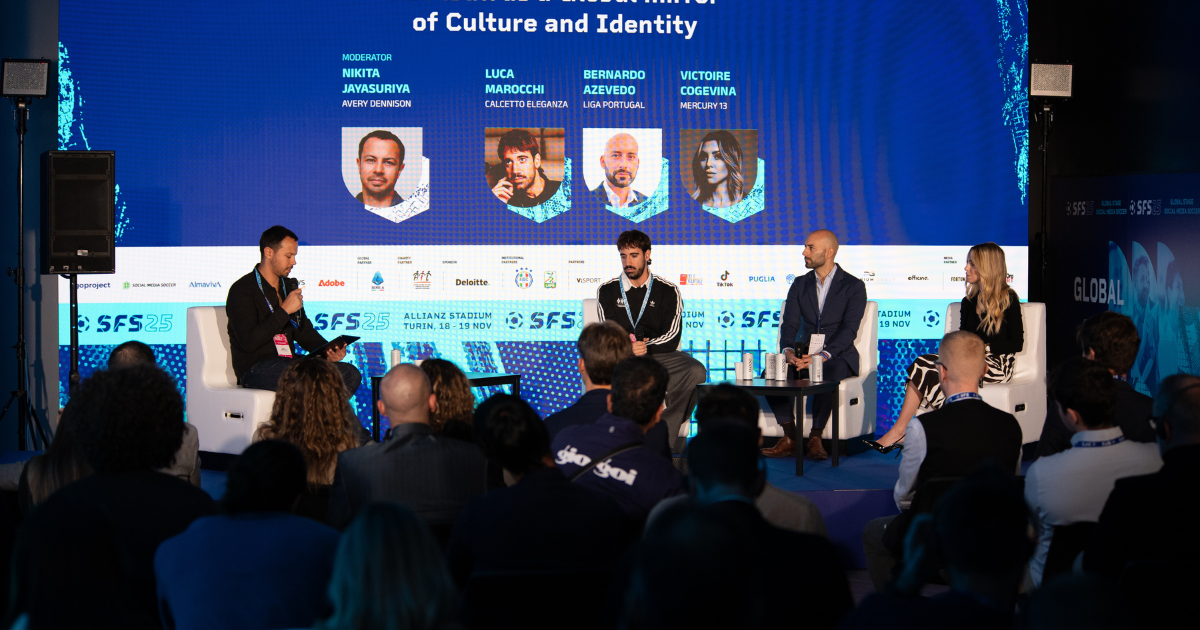
Football, Identity and Brand Revolution: The Future Runs Through Personalisation and Storytelling
The third panel of the day on the Global Stage focused on the relationship between football, identity and culture, featuring Luca Marocchi, Victoire Cogevina and Bernardo Azevedo, General Manager of Liga Portugal, moderated by Nikita Jayasuriya. The discussion explored the role of football as a builder of identity, both in the men's and women’s game. According to Victoire Cogevina, the social potential of the sport is still evolving: “Only time will tell, but I believe football is a platform for social
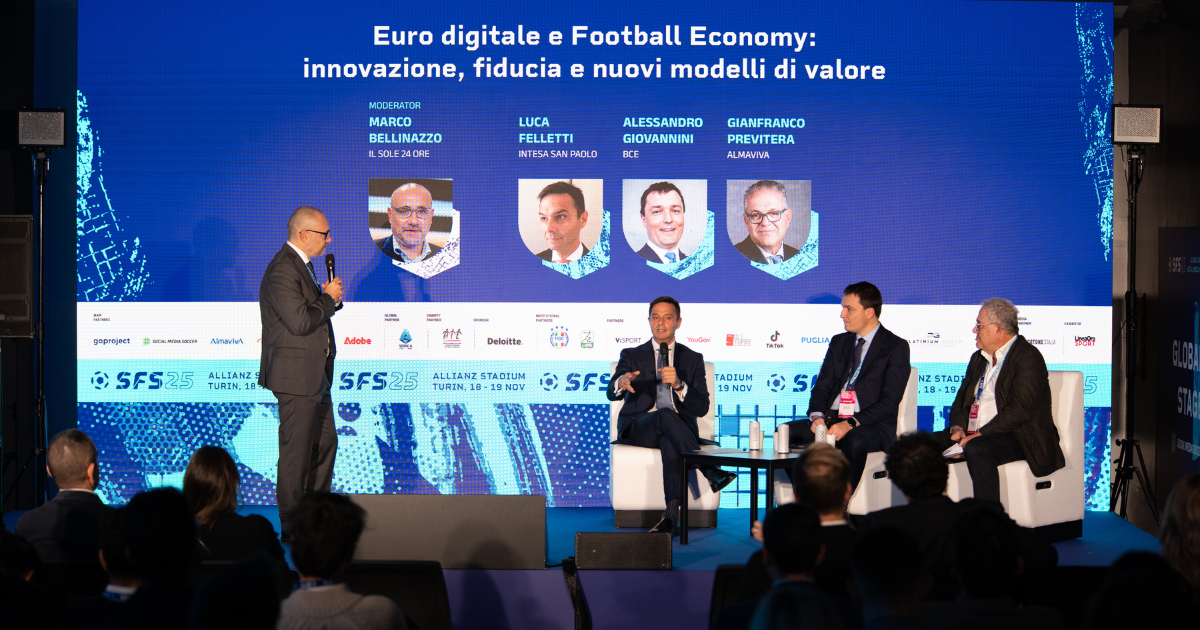
Digital Euro, Data and Fans: Italy Leads Europe’s Payment Revolution
SFS 25 hosted a panel focused on the relationship between the Digital Euro and the Football Economy, featuring Luca Felletti, Sales & Marketing Director at Intesa Sanpaolo, Alessandro Giovannini, Digital Euro Project Leader at the ECB, and Gianfranco Previtera, Commercial Director at Almaviva, moderated by Marco Bellinazzo from Il Sole 24 Ore. Giovannini opened the discussion by clearly explaining what the Digital Euro is and why it represents an inevitable transformation in a world where cash usage continues to decline. “The Digital Euro
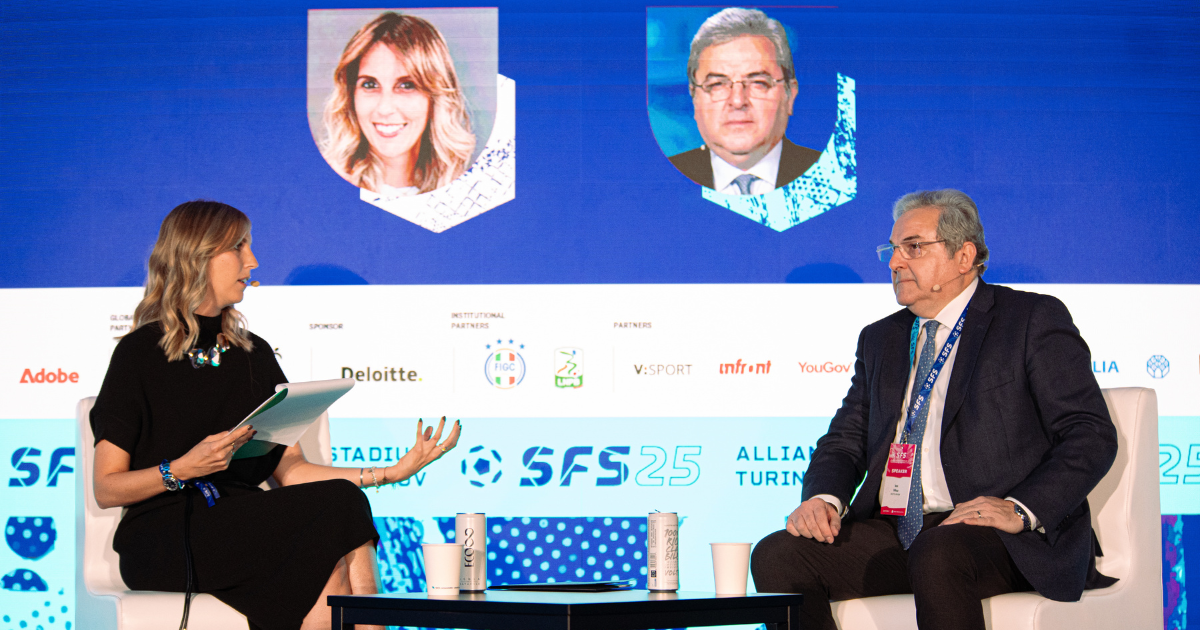
UN TOURISM AT SFS25: THE IMPORTANCE OF SPORTS TOURISM BETWEEN INNOVATION AND SUSTAINABILITY
The panel that opened the Global Stage of the eighth edition of the Social Football Summit featured Ion Vilcu, Director of the Affiliate Members and Public-Private Collaboration Department at UN Tourism, interviewed by Sports Business Growth Advisor Carolina Tha. In his opening remarks, Vilcu explained the reasons behind UN Tourism’s presence at SFS25, starting from a key figure illustrating the growth of sports tourism. “We’re talking about more than 600 million dollars, accounting for 10% of global tourism, with expected growth
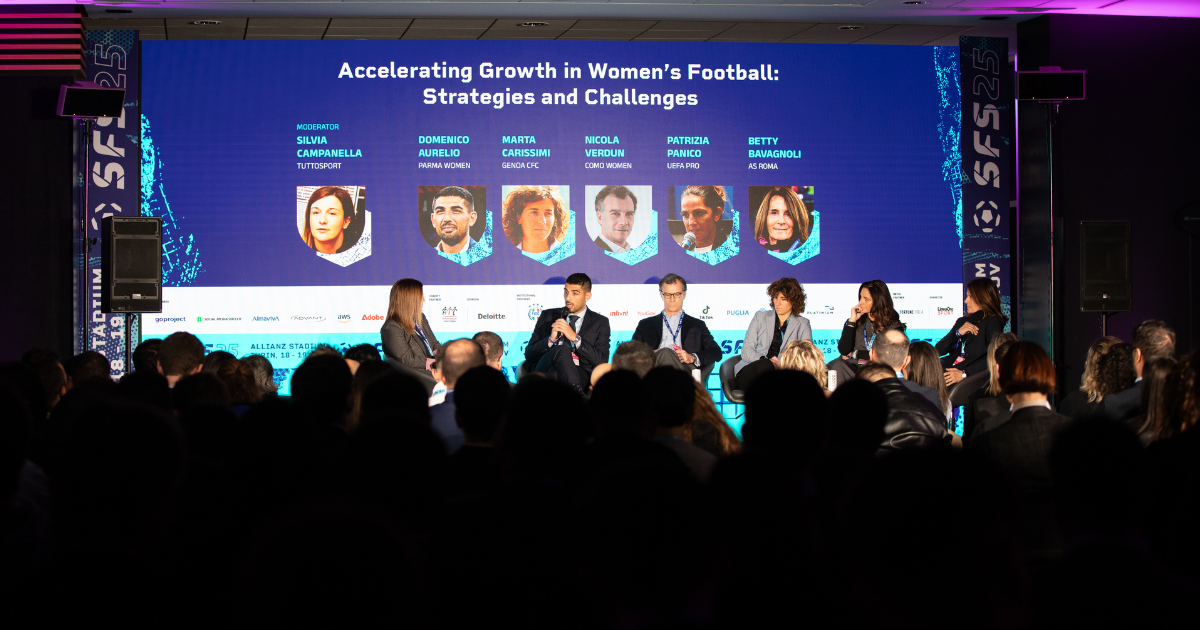
Women’s Empowerment and Professionalism: The Future of Football in Italy
Moderated by Silvia Campanella (TuttoSport), an exceptional panel composed of Domenico Aurelio (Parma Women), Marta Carissimi (Genoa CFC), Nicola Verdun (Como Women), Patrizia Panico (UEFA Pro), and Betty Bavagnoli (AS Roma) discussed the sporting, political, and social impact of women's football in Italy, contextualized to the current historical moment. The path towards evolution The panelists retraced the concrete steps that have led to the current development of the movement. Betty Bavagnoli, building on her experience as a former player and coach, emphasized
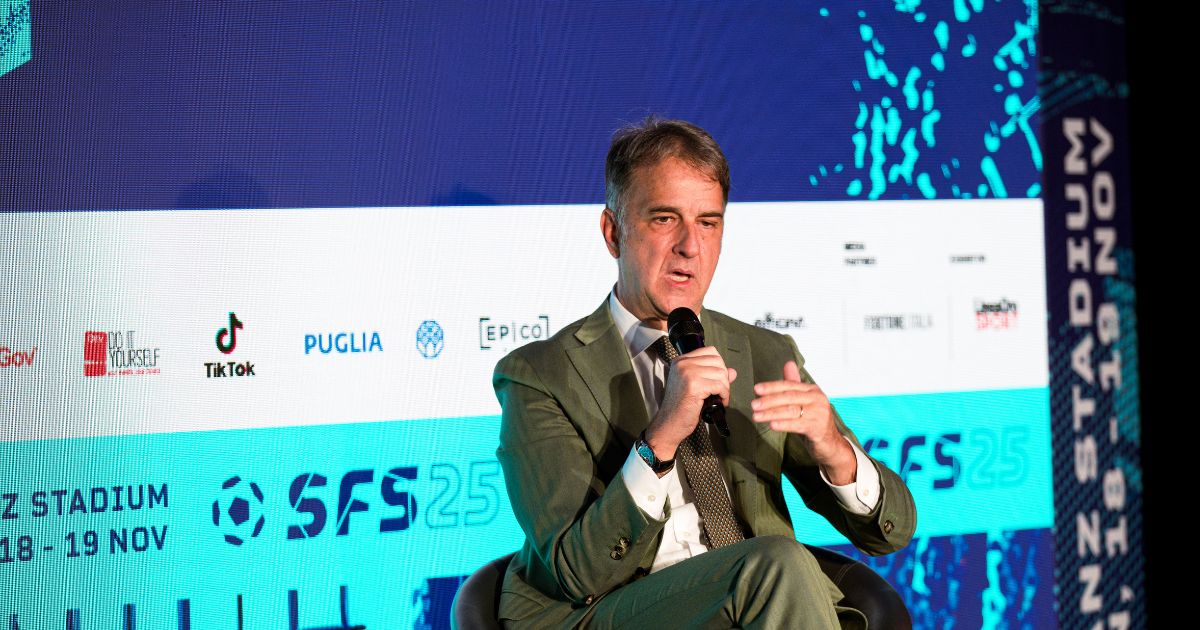
UEFA: Michele Uva Unveils the Sustainable Strategy for Euro 2032 and the Stadium Revolution in Italy
Michele Uva, the Executive Director for Social and Environmental Sustainability and UEFA delegate for Euro 2032, was the guest of honor on the Football Stage, interviewed by Elisabetta Esposito of La Gazzetta dello Sport. Uva, recently included in Time's list of the 100 most influential people in the world, outlined UEFA’s strategy concerning Corporate Social Responsibility (CSR) and its impact on European football, with a crucial focus on the stadium issue ahead of Euro 2032. A systemic effort: Investing in CSR Uva

TicketOne announces T-zOne at SFS 25: the new sports ticketing platform
As you know, the SFS is the stage where the biggest innovations meet the business and passion of sport. And speaking of innovation, we couldn't be more excited to share a key moment that took place during our event: the official launch of T-zOne, TicketOne's brand new B2B platform entirely dedicated to sports ticketing. To fully understand the vision and strategy behind this revolutionary step, we had the privilege of speaking with Andrea Grancini, CEO of TicketOne. His answers offer valuable
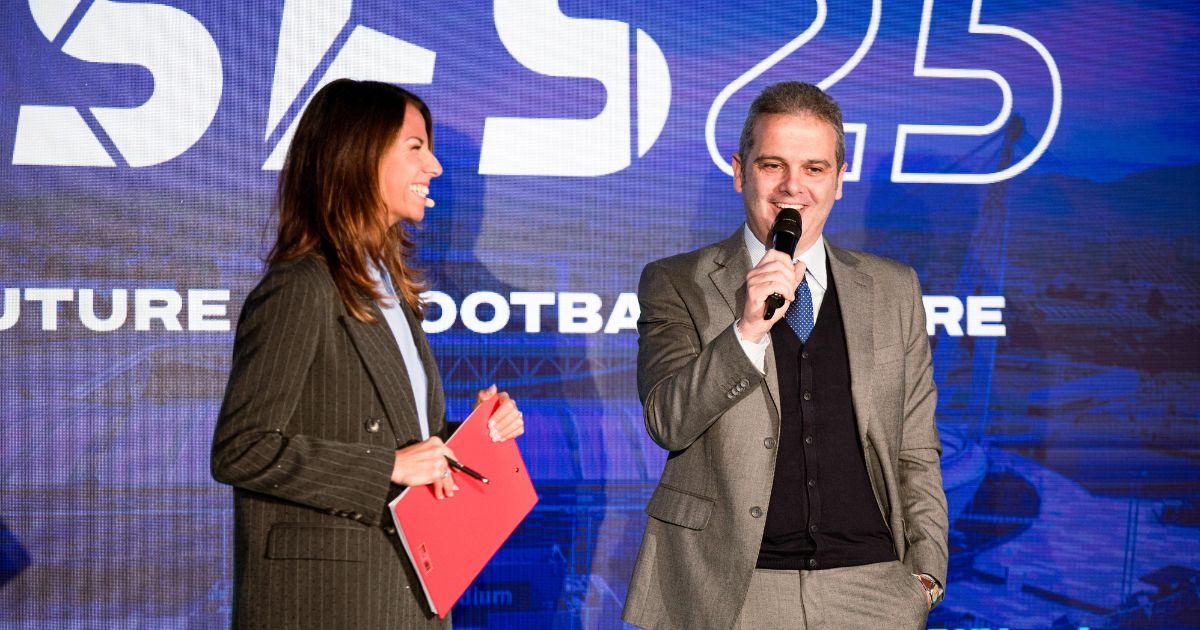
Valentini: “We Officially Inaugurate SFS 25 at Allianz Stadium, a Benchmark for the Entire Football Industry”
The curtain has officially risen on the eighth edition of SFS 25, the most anticipated event for the entire Football Industry. The two-day event, taking place at the Allianz Stadium on November 18 and 19, 2025, kicked off in a room packed with participants, partners, and international stakeholders. Giving the start to the proceedings, from the stage of the Football Stage, was Gianfilippo Valentini, CEO of GoProject, host, and creator of the event. His opening speech highlighted the strategic evolution of the
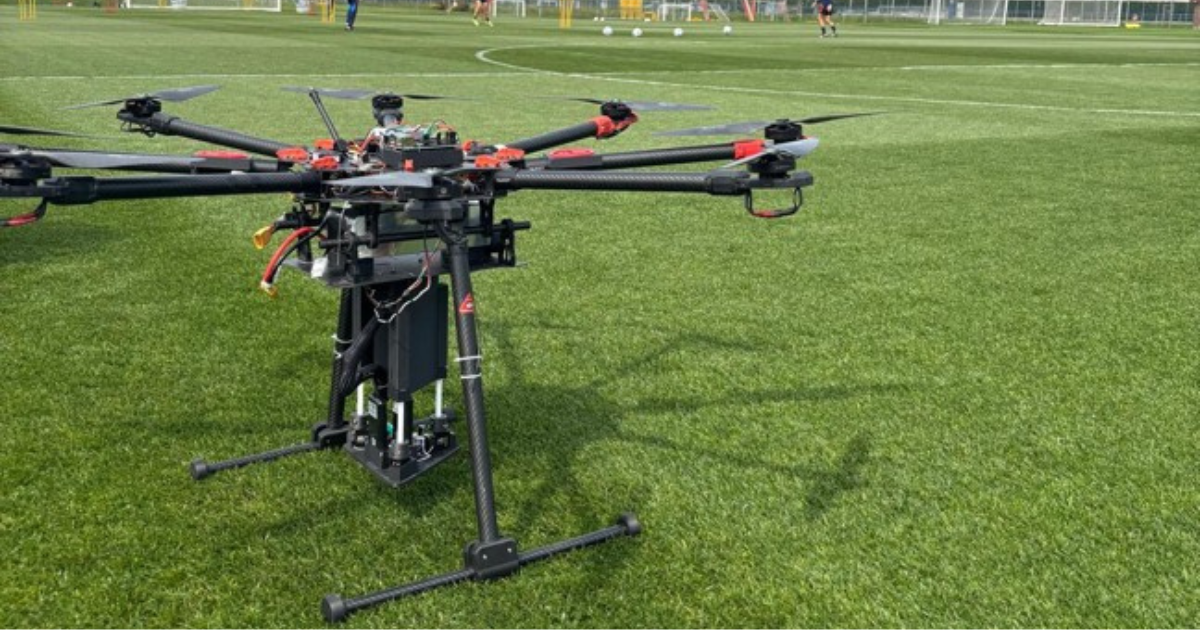
Space11: “In modern football, turning the pitch into a source of strategic data means having a real competitive advantage”
In the era of data-driven football, performance analysis is no longer limited to athletes' GPS data. The next frontier of innovation concerns the fundamental infrastructure on which all matches take place: the turf. Its quality directly influences player health, athletic performance, and the club’s economic efficiency. SFS25 is pleased to present Space11, a pioneer in deep-tech solutions that is revolutionizing the management of sports fields. To understand the scope of this innovation, we spoke with Raffaele Simonetta, CEO & Founder of Space
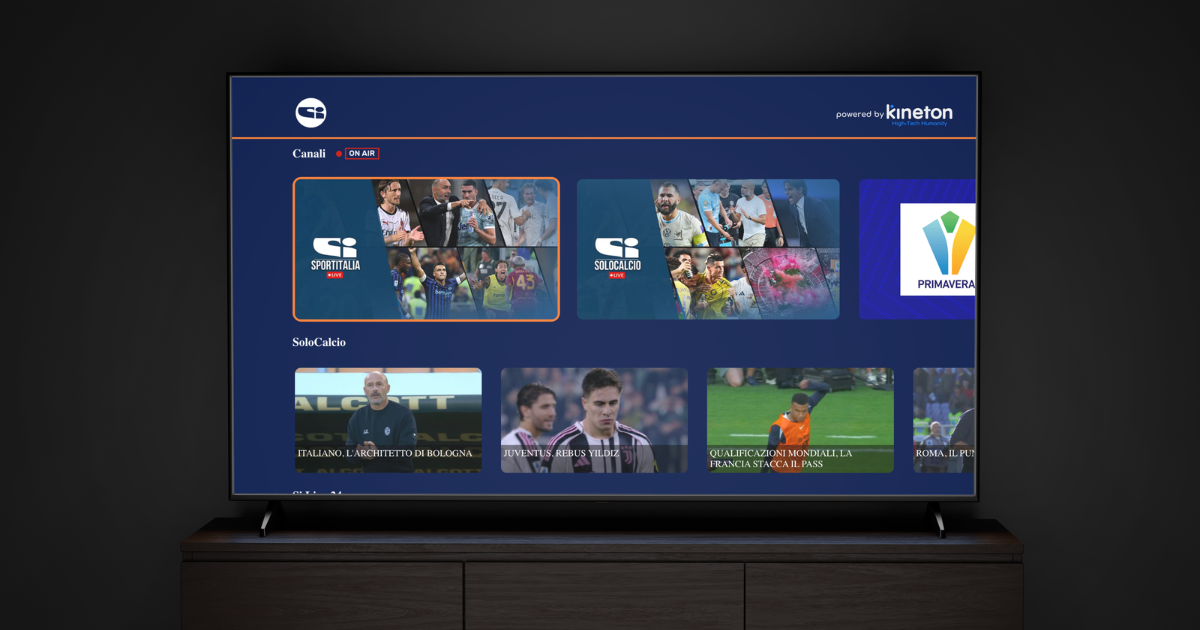
Strategy and content: a look at football’s digital future with Kineton
Football is no longer just a sport, but a complex ecosystem fueled by data, technology, and a constant quest for engagement. The real frontier of economic growth and the fan experience today lies at the intersection of Media, IT, and Telco. In view of the Social Football Summit 2025, we had the honor of delving into these dynamics with Alessandro Cavicchia, Deputy & Head of Business Development in the Media-IT-Telco Area at Kineton, a leading company that is charting the course

LGA Service: facility management and the quality of the sports experience
The efficiency of a football club is not just measured on the pitch, but also in the care of its infrastructure and the people who make it operational every day. The Social Football Summit (SFS 25) highlights the role of facility management and how human value, professionalism, and attention to detail directly impact brand quality and the customer experience. We interviewed Giulia Gencarelli, Marketing Manager at LGA Service, a historical player in the Facility Management sector, to understand how their 360-degree