


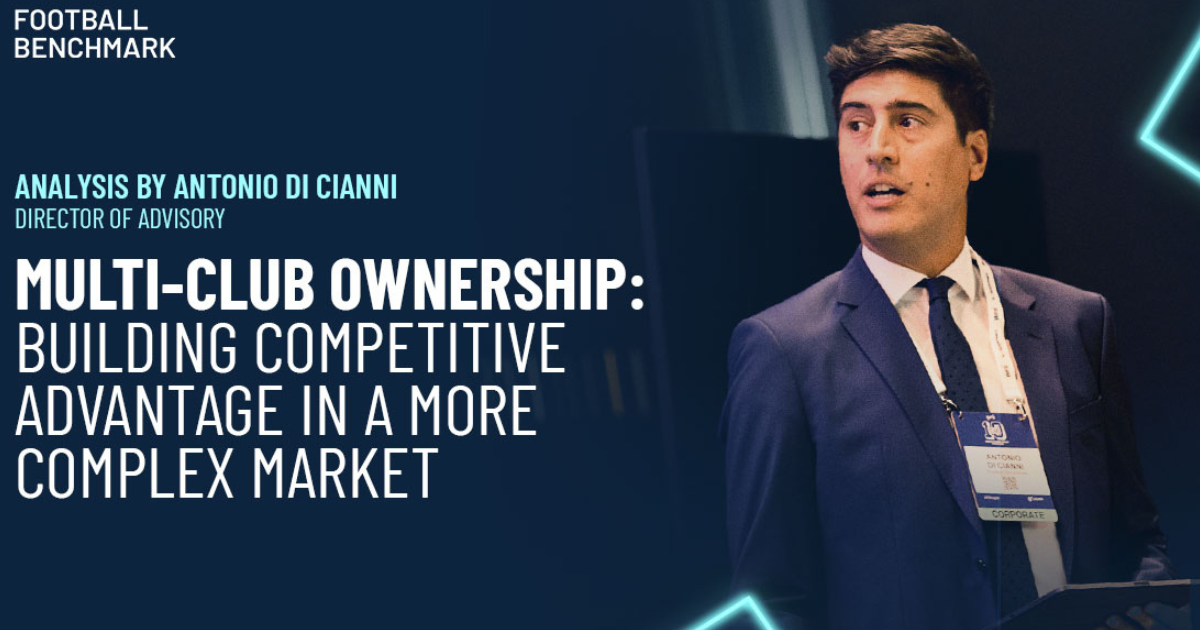
Following Football Benchmark’s multi-club ownership workshop at World Football Summit Madrid, Antonio Di Cianni, Director of Advisory, considers where MCOs can create value and the strategic and regulatory challenges that investors must address.
Multi-club ownership has become an established part of the global football investment landscape. The number of MCO groups worldwide increased from 18 in 2012 to 152 in 2024, while the number of clubs within these structures rose from 40 to 380 over the same period. Eight of the top 15 most valuable European football clubs in Football Benchmark’s 2026 Football Clubs’ Valuation report are now connected to what could be defined as multi-club networks.
After more than a decade of rapid expansion, however, the market has entered a period of consolidation. The number of clubs within MCO structures declined by 10% in 2025, while European club transactions involving an MCO fell from a peak of 58 in 2022 to 33 in both 2024 and 2025.
This does not mean that the MCO opportunity has disappeared. It shows that investors are looking more carefully at how these models can work in practice. Acquiring clubs is only the beginning. The more difficult task is building a group in which every club has a clear role and the intended sporting and financial benefits can genuinely be delivered.
That balance between opportunity and complexity was at the centre of the workshop I hosted at World Football Summit Madrid: “Multi-Club Ownership: Building competitive advantage in a globalised game”. David Dwinger and Xander Czajkowski of Estrella Football Group joined parts of the discussion and shared their experience of developing a horizontal MCO model.
The opportunity remains clear
If implemented effectively, an MCO can increase the value of its individual clubs and the wider group. For most groups, player development and trading remain the clearest opportunity. Operating across different markets can widen access to emerging talent and create pathways between clubs competing at different levels. But common ownership alone does not create an effective pathway. The clubs must have compatible recruitment strategies, suitable sporting environments, and a clear view of how each player can progress.
The value also does not depend only on players moving between affiliated clubs. A successful model should improve how the group identifies and develops talent and how it ultimately realises value, whether through first-team contribution or an external sale.
Commercial opportunities – although more difficult to achieve – may also exist through shared expertise, technology, and selected central services. A group may be able to reduce duplication, improve the capabilities of individual clubs, and offer commercial partners access to several markets. The scale and nature of these opportunities will differ between groups, depending on their markets, club profiles, and objectives.
The structure must follow the strategy
The choice between a vertical and horizontal structure has consequences for governance, investment, player pathways and the relationship with supporters. It should therefore follow the investor’s objectives rather than simply reflect an established MCO model.
A vertical model can create clear player pathways towards a flagship club but it may also produce an uneven allocation of resources and increase concerns that other clubs exist mainly to serve the leading one.
A horizontal model, on the other hand, gives clubs a more equal position within the network, with shared access to expertise and investment. During the workshop, David and Xander explained how Estrella is approaching this model, including its commitment to retaining each club’s name, badge, and local identity. Their contribution illustrated how a group can seek to balance local independence with the benefits of a wider network.
It also reinforced an important point: the model must reflect the specific objectives and composition of the group. A one size-fits-all approach does not work.
The questions we ask investors
When we work with investors considering an MCO strategy, we always begin with several fundamental questions. What do you want to achieve? What is your vision for the group, and what is your available ticket size?
These questions typically come before the search for a club. They determine the group-level strategy, the intended role of each club, and which capabilities should sit centrally or remain under local management.
We start by considering the most strategically sound market to invest in. Selecting a country and league should consider more than a club’s availability or estimated acquisition price. The media landscape, revenue distribution, competition structure, and the league’s financial performance all matter. The regulatory framework – including, importantly, nationality rules – access to continental competitions, and local attitudes towards MCO can also affect whether the model is viable in a given country.
Then, using a funnel approach, we move from market/league considerations to what the investor should acquire. What type of club fits the strategy? Is an acquisition necessary, or could a partnership achieve the same objective? Does the investor require majority control, or would a minority position be sufficient?
At club level, we assess, among other things, the ownership structure, finances, infrastructure, and commercial potential. We also examine the squad, the club’s record in developing talent and trading players, and whether it can fulfil the intended role within the group.
An attractive opportunity can itself become the starting point for an MCO strategy, or be considered more optimal as a standalone acquisition. The key is to understand how the club could fit within the investment proposition and whether the investor has the resources and operating capabilities to support it after the transaction.
Regulation must be considered from the start
Regulation is now shaping MCO strategy rather than simply placing limits around it. Article 5 of UEFA’s club competition regulations limits the control or influence that one party can exercise over multiple clubs, prohibiting them to take part in the same UEFA competition. Even more importantly, UEFA’s Financial and Sustainability Regulations restrict the accounting treatment of transfers between related clubs: they are no longer able to improve their financial performance through intra-group transactions. Indeed, in the event of an intra-MCO transfer, the selling club must record the transaction at the lower of proceeds and net book value, limiting the capability to record profit on disposal of players through intra-MCO transfers.
FIFA limits the number of international loans, while domestic rules covering nationality, minimum salaries, and reserve teams vary considerably between markets.
Regulation is therefore not a workstream to address once acquisitions have been completed. It can determine which markets are suitable, how ownership and governance must be structured, and whether the intended player pathways are workable. These issues need to form part of the original investment thesis.
From investment idea to operating model
The potential advantages of multi-club ownership are apparent. An MCO can provide access to talent and markets that individual clubs may struggle to reach independently. It can also strengthen club capabilities and create new player development opportunities. But these outcomes depend on the quality of the strategy and its execution.
The most efficient MCOs are those in which every acquisition has a clear purpose, the operating model supports that purpose, and each club becomes stronger through its participation in the group.
This is where my colleagues and I at Football Benchmark often support investors. We help them define the investment strategy, understand whether an MCO is the right approach to achieve their objectives, and turn that into action.
We also work with owners post-acquisition, reviewing organisational structures, operating performance, and whether the group is delivering the expected sporting and commercial benefits. If you would like to continue the conversation, you can reach me at antonio.dicianni@aceadvisory.eu.
Multi-club ownership: Building competitive advantage in a more complex market
Following Football Benchmark’s multi-club ownership workshop at World Football Summit Madrid, Antonio Di Cianni, Director of Advisory, considers where MCOs can create value and the strategic and regulatory challenges that investors must address. Multi-club ownership has become an established part of the global football investment landscape. The number of MCO groups worldwide increased from 18 in 2012 to 152 in 2024, while the number of clubs within these structures rose from 40 to 380 over the same period. Eight of the
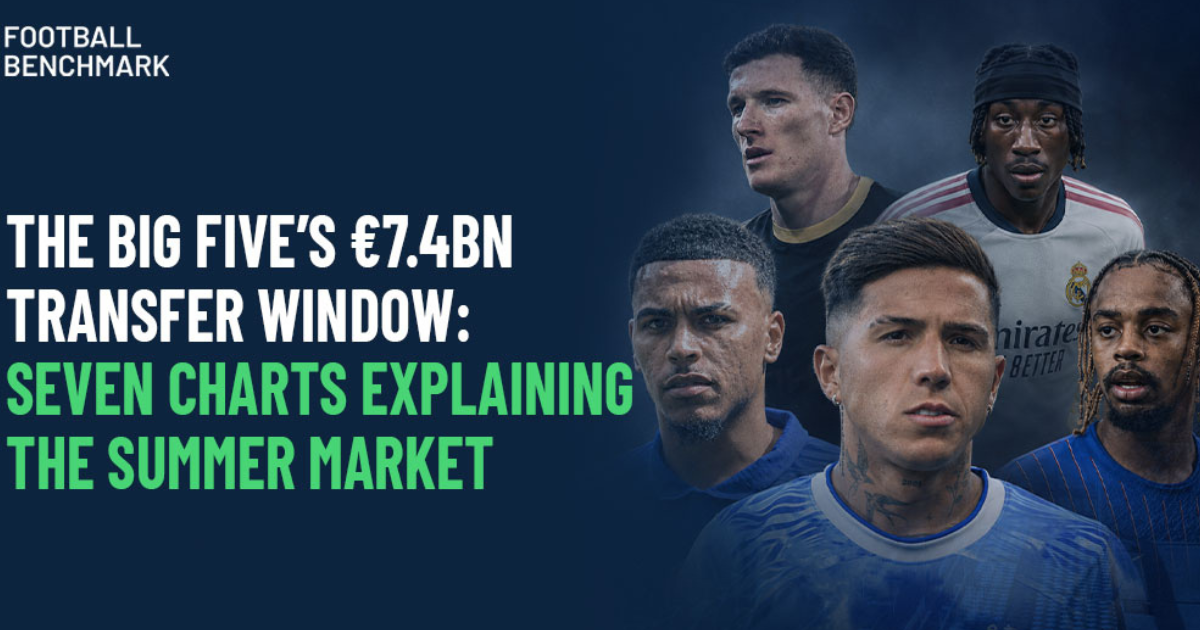
The Big Five’s €7.4bn transfer window: Seven charts explaining the summer market
Article written by Football Benchmark The 2026 summer transfer window was eventful, drawing attention across the industry as a succession of high-profile moves and nine-figure fees dominated the headlines. In this article, Football Benchmark takes a deep dive into the completed window to examine where the money was spent, where it came from, and the trends emerging across the market. Among the key findings, our analysis reveals the scale of the Premier League’s dominance, the continued importance of Ligue 1 as
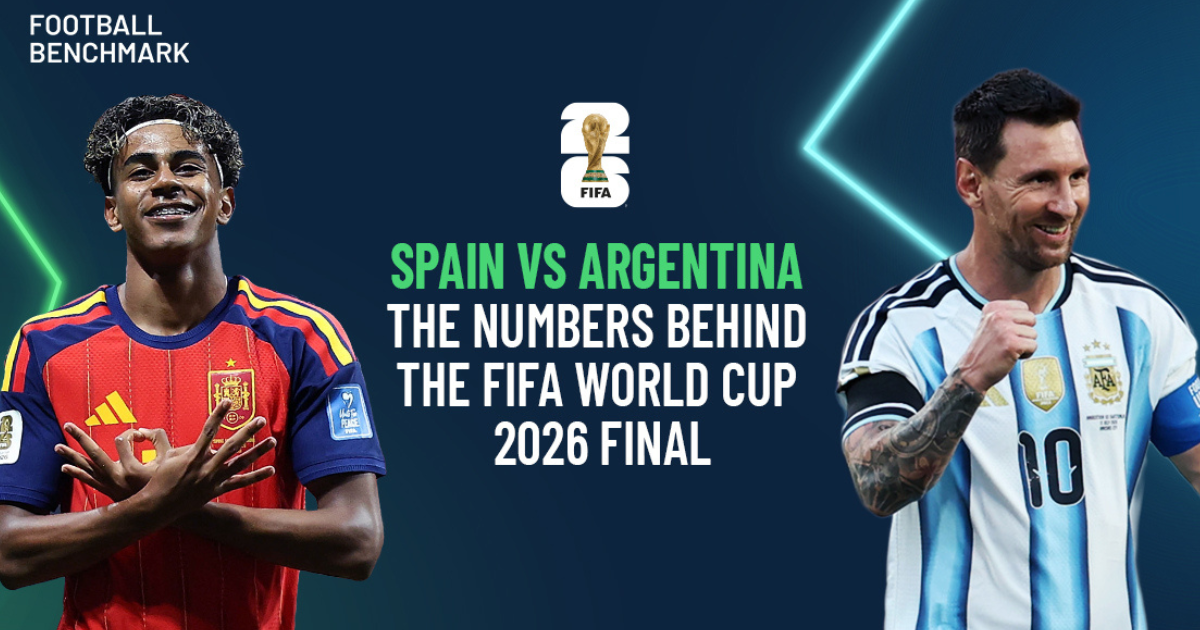
Spain vs Argentina: the numbers behind the FIFA World Cup 2026 Final
Article written by Football Benchmark The first-ever 48-team FIFA World Cup is down to two nations competing for football's most coveted prize. Spain and Argentina will meet in the FIFA World Cup 2026 Final on 19 July. European champions Spain are aiming to become world champions for the second time, while Argentina are looking to become four-time winners and to defend the title they won in Qatar four years ago. This analysis compares the two finalists across a range of indicators, from squad
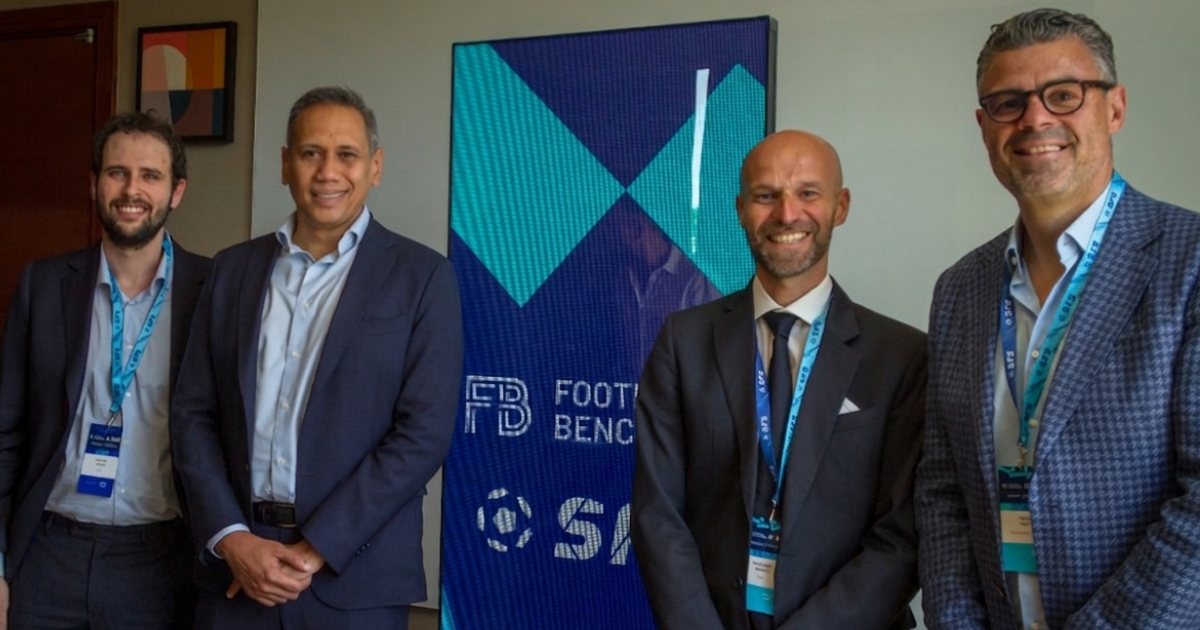
European Football Leaders Discuss Growth, Value Creation, and Sustainability in European Football
Football Benchmark and the Social Football Summit gathered some of the international football industry's leading stakeholders in Budapest on May 29th for “The Business of European Football: Growth, Value, and Sustainability,” an event held on the eve of the UEFA Champions League final. The Budapest gathering also marked a new international milestone in the build-up journey toward the Social Football Summit 2026, scheduled for November 10th and 11th at the Allianz Stadium in Turin. Following the SFS Snack events organized in
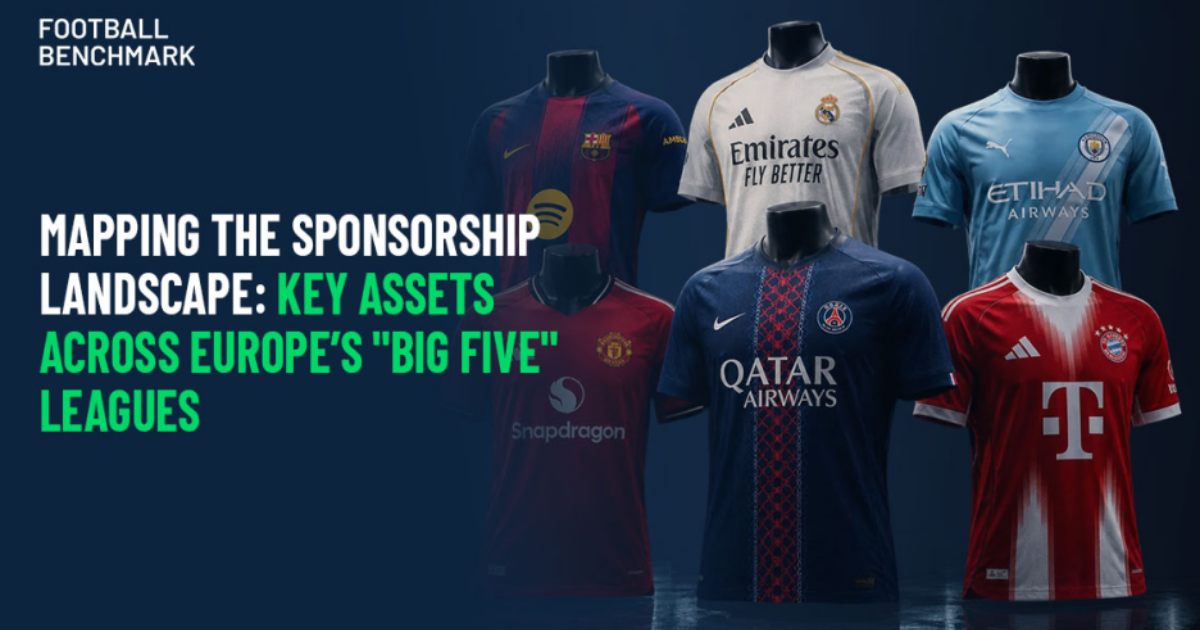
Mapping the sponsorship landscape: key assets across Europe’s “Big Five” leagues
Article written by Football Benchmark European football’s sponsorship market continues to expand, reinforcing the strategic importance of commercial partnerships within the game’s economic model. According to the latest market overview by the European Sponsorship Association (ESA), the European sponsorship sector reached €34.5 billion in 2025, representing a 4.7% year-on-year increase. Sport accounted for 72% of the total market, while football alone generated more than €13 billion in sponsorship value. A significant share of this activity is concentrated within the “Big Five” leagues
European football M&A in 2025: fewer mega deals, broader global reach
Article written by Football Benchmark European football’s investment landscape in 2025 reflects a maturing market, with global capital continuing to flow into the game through a broader mix of strategic acquisitions, growing multi-club networks, and investment activity across all tiers of the pyramid. Between January and October 2025, Football Benchmark’s Club Transaction database recorded 76 acquisitions involving clubs across all levels of the European game, based on tracked transactions known to us and publicly available information. Of the transactions with available
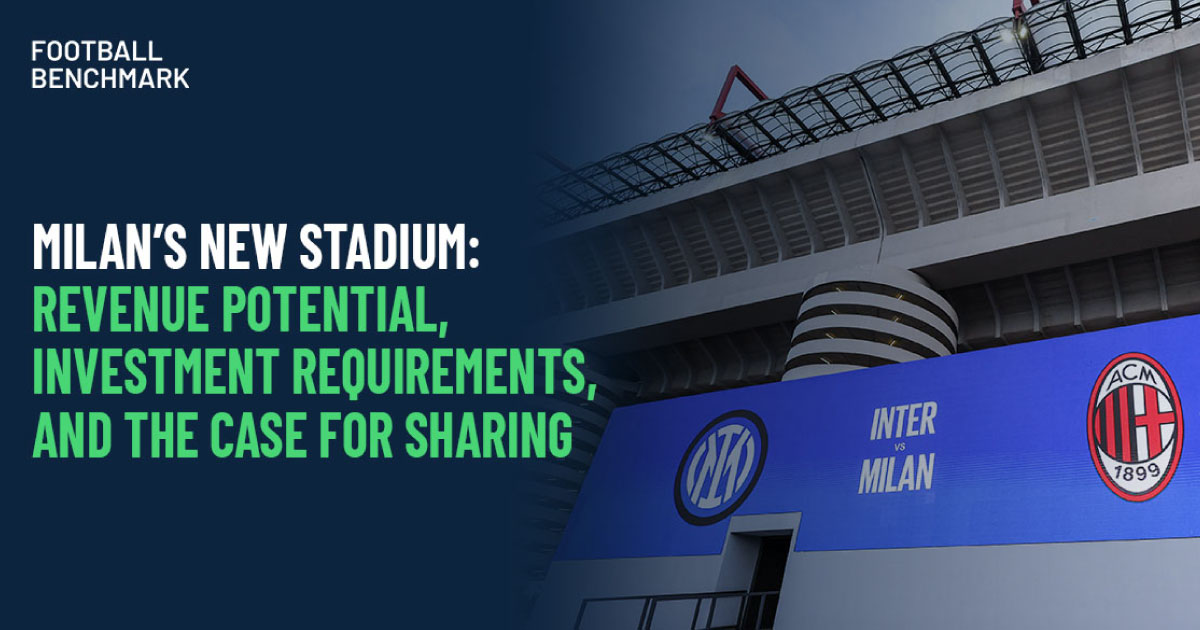
Milan’s new stadium: Revenue potential, investment requirements, and the case for sharing
This article will answer the following three key questions: how much additional revenue could the new stadium generate, what level of investment will it require, and does it truly make sense for the two clubs to continue sharing a home? On 30 September 2025, the Milan City Council approved the sale of San Siro and its surrounding land to AC Milan and FC Internazionale, clearing the way for the stadium’s demolition and the construction of a new, shared home for the
UEFA Club Competition reforms over the years: Analysing the impact on clubs in small and medium-sized markets
Article written by Football Benchmark UEFA Club Competitions (UCC) are widely regarded as the pinnacle of club football. For most clubs, however, participation on this stage is anything but guaranteed and often celebrated as a landmark achievement. Automatic access to the UEFA Champions League (UCL) league phase is restricted to the top ten leagues by UEFA’s country coefficient. However, the remaining 45 nations, home to nearly 200 million people, are a fundamental component of European club football, providing diversity, depth,
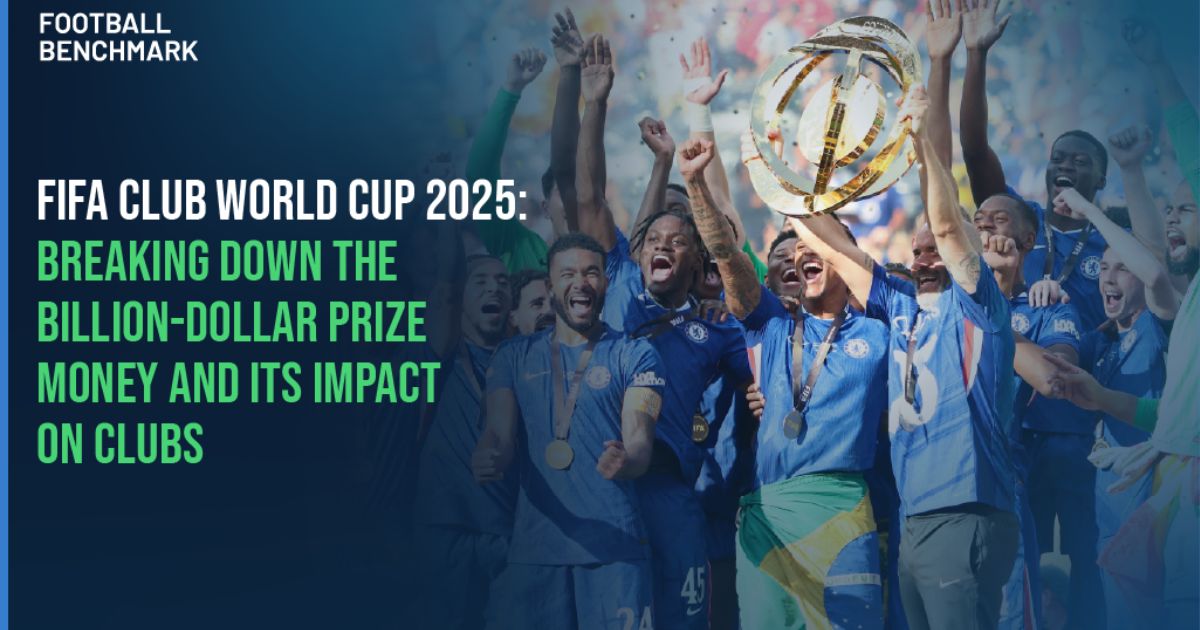
FIFA Club World Cup 2025: Breaking down the billion-dollar prize money and its impact on clubs
Analysis by Football Benchmark With USD 1.25 billion allocated through prize money and solidarity payments, the expanded FIFA Club World Cup offers a practical example of how global competitions are influencing club revenues and shifting the financial landscape across regions and tiers of the game. While the highest earners were familiar names, the data reveals a more nuanced picture. European clubs from outside the “Big Five” leagues, as well as those with lower annual revenues globally, experienced significant financial impacts relative
Football Clubs’ Valuation: The European Elite 2025
Analysis by Football Benchmark In the 10th edition of Football Benchmark’s Valuation Report, Real Madrid CF reaffirm status as world’s most valuable football club and become first valued over EUR 6 billion. Key Conclusions: 1) Real Madrid CF lead Football Benchmark’s Football Clubs’ Valuation: The European Elite rankings at EUR 6.3 billion, the highest Enterprise Value ever recorded. 2)Manchester City FC and Manchester United FC complete an unchanged top three, both surpassing the EUR 5 billion mark for the first time, while Aston Villa